
Accounting and operations automation is the connection between the work that runs your business and the finance records that control it. It matters because faster approvals, cleaner data, and live visibility only happen when purchasing, delivery, invoicing, reporting, and cash management move through one joined-up process. This is where growing businesses in Cyprus and Greece stop reacting late and start managing with control.
What Accounting and Operations Automation Means in Practice
Accounting automation handles the financial side of the business engine. That includes invoice capture, approvals, postings, reconciliations, payment scheduling, reporting, and internal controls. Operations automation handles the events that create those financial outcomes: supplier onboarding, purchasing, stock movements, project updates, timesheets, service completion, and customer fulfilment.
Put simply, operations creates the activity, accounting records the impact. If those two layers are disconnected, your business runs on delay. If they are connected, every approved purchase, completed job, or received invoice flows into finance with context attached.
That is the real meaning of accounting and operations automation. It is not just software doing admin faster. It is your business running as one controlled system, where execution and finance speak the same language. For firms that want real-time visibility, this is the difference between looking at history and managing what is happening now.
Why Separate Automation Creates More Work
A common mistake is automating tasks inside separate tools and calling the job done. One app captures invoices. Another manages approvals. A third holds supplier data. The accounting system receives the final numbers later, often through imports, emails, or manual rekeying.
That structure creates duplicate records, broken handoffs, and endless exception handling. Your operations team sees one version of events. Your finance team sees another. Approvals stall because nobody owns the full chain. Reporting becomes a patchwork exercise at month-end.
The commercial cost is bigger than the admin cost. Disconnected systems weaken cash flow control, delay accrual accuracy, and make KPIs harder to trust. When committed spend sits in one system and actual liabilities sit in another, your visibility is not real-time. It is delayed theatre.
The Shift From Task Automation to Connected Process Control
Basic automation removes individual manual actions. It extracts invoice data, pushes reminders, or posts bank transactions automatically. Useful, but limited.
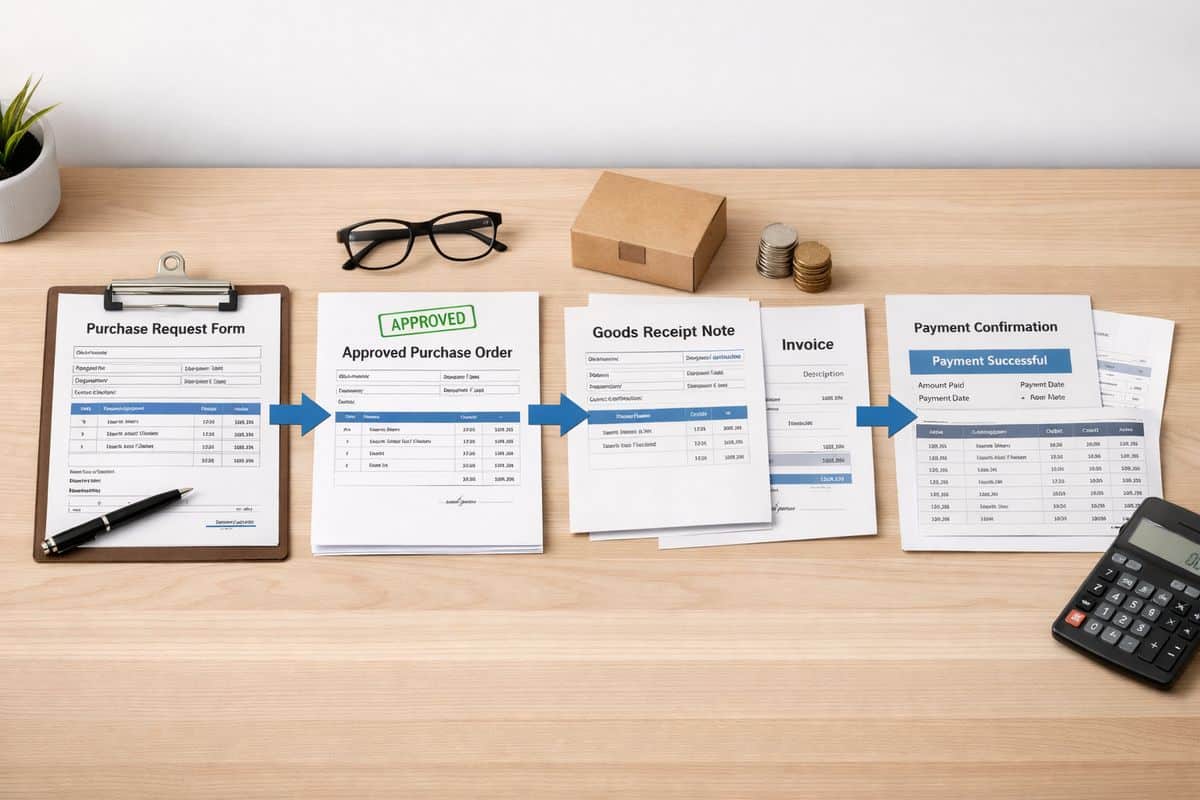
Connected automation controls the whole process from start to finish. It links an operational trigger to a financial record in real time. A purchase request becomes an approved order. A received invoice is matched against that order. A completed service milestone triggers billing. A cleared payment updates both supplier history and cash position.
That shift matters because the market is moving beyond isolated tasks. Finance leaders are pushing for connected cross-functional automation that links finance with procurement and other operating functions. That is the model that delivers live control, fewer exceptions, and stronger decision-making.
How the Two Functions Work Together Across Core Workflows
The easiest way to understand this is to follow the workflows you already manage. Every core business process starts with an operational action and ends with a financial consequence. Automation works best when that full journey is designed as one flow.
Procure-to-Pay: From Purchase Request to Posted Invoice
Procure-to-pay starts before an invoice arrives. Someone needs a product, service, subcontractor, or materials. That request goes through approval rules, budget checks, and supplier validation. Once approved, a purchase order is created. Goods or services are then confirmed as received, and only after that should the supplier invoice move to payment.
In a connected model, the invoice is captured automatically, matched to the order and receipt, routed only where an exception exists, then posted to the ledger with the right coding and VAT treatment. Payment scheduling follows approved terms, and your cash forecast updates immediately.
This one chain cuts maverick spend, duplicate payments, and manual entry. It also improves approval discipline because finance and operations are working from the same transaction history. If you are reviewing where automation delivers value first, the highest-return workflows usually sit in the processes worth automating early.
Order-to-Cash: From Operational Delivery to Revenue Recognition
Order-to-cash works the same way in reverse. A sale is not complete when a quote is accepted. Revenue only becomes useful when delivery, invoicing, collection, and cash application happen cleanly.
For a product business, dispatch can trigger invoicing. For a service business, a signed timesheet, milestone completion, or recurring subscription event can trigger billing. For project-led firms, approved work in progress can feed both invoice generation and revenue recognition rules.
The result is a shorter billing cycle, better debtor control, and stronger cash flow forecasting. You stop waiting for someone to remember that work was finished last week. The system captures the trigger and moves the process forward. That matters in businesses managing multiple teams, field activity, or project delivery, especially where operational delays quickly turn into working capital pressure.
Record-to-Report: From Daily Transactions to Live Financial Visibility
Record-to-report is where connected automation proves its value to leadership. Daily transactions from purchasing, sales, payroll, expenses, inventory, and banking feed directly into reconciliations, management accounts, dashboards, and close activities.
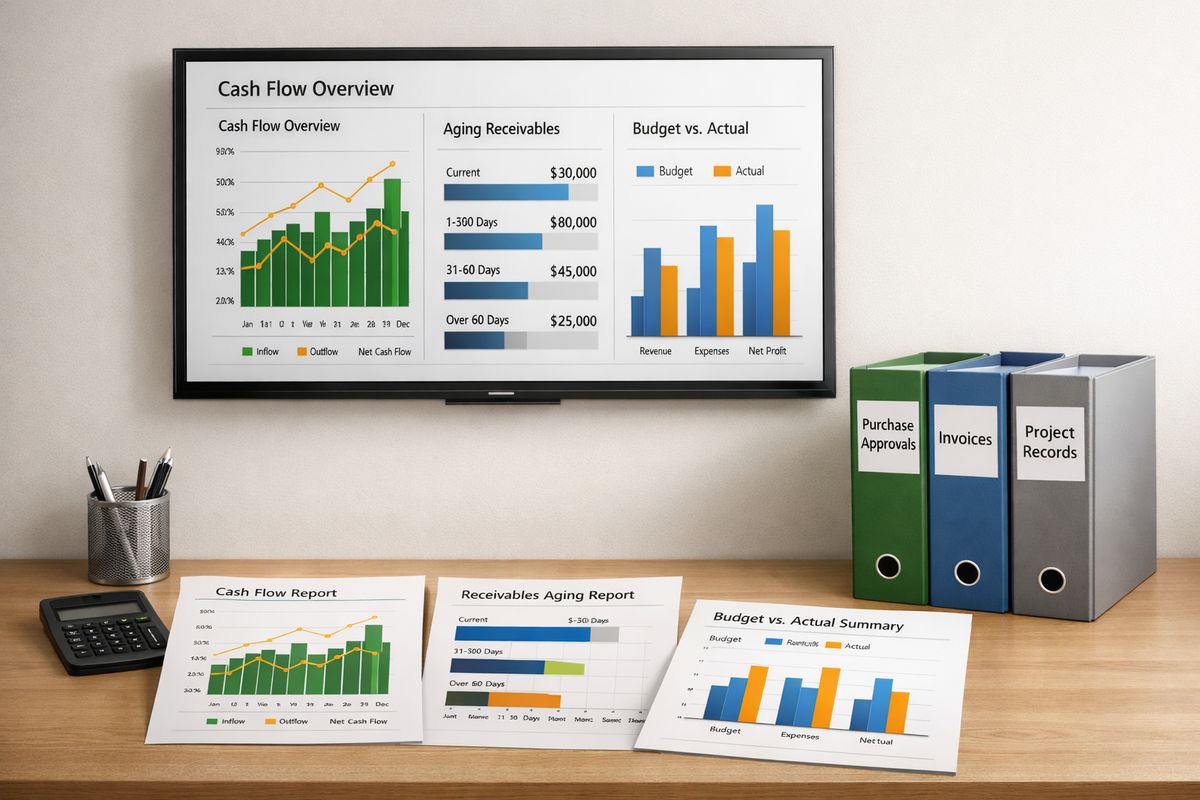
Instead of assembling reports after the month has ended, you see the business through live data. Margin by project. Committed spend by department. Overdue receivables. Bank position. Budget versus actual. These are not separate management packs stitched together from spreadsheets. They are outputs from one controlled transaction flow.
That is also why businesses increasingly need more than simple accounting software. The real gain comes from joining finance and day-to-day operations so your numbers reflect what the business is actually doing.
The Business Outcomes You Gain From Connected Automation
Automation only matters if it improves business control. The value is measurable, and it shows up in speed, accuracy, and decision quality.
Real-Time Visibility Across Cash Flow, Costs, and KPIs
Connected automation gives you live visibility into current liabilities, committed spend, receivables, gross margin, and operational output in one view. That changes how you manage. Instead of waiting for month-end, you see budget pressure while purchase requests are still pending. Instead of discovering revenue slippage later, you spot incomplete billing against delivered work now.
For growing businesses across Cyprus and Greece, this is a practical advantage. Multiple entities, distributed teams, subcontractors, suppliers, and cross-border trading all add complexity. A connected system gives you one operating picture rather than fragmented updates from different departments.
Higher Accuracy, Fewer Exceptions, Stronger Compliance
Speed matters, but accuracy matters more. Recent finance research found that 61.6% prioritise accuracy over speed in automation programmes. That makes sense. Bad data moves fast too.
Connected workflows improve coding consistency, approval control, audit trails, VAT handling, and document retention. Every action leaves a record. Every exception is visible. Every posting has operational context behind it. That strengthens compliance with internal policy and external obligations, including IFRS-aligned reporting, GDPR-aware data handling, and cross-border tax treatment.
This is where a partner such as Prodyssey Solutions adds value: not by adding software for its own sake, but by connecting finance, systems, and operating workflows into one controlled model.
Lower Processing Costs and Better Use of Your Team
Manual posting, chasing approvals, correcting mismatched records, and reconciling spreadsheets consume expensive time. Automation removes that low-value effort and reallocates capacity toward analysis, supplier management, forecasting, and performance control.
This is not about shrinking finance oversight. It is about raising its level. Your finance team spends less time cleaning data and more time using it. Your operations team spends less time answering status emails and more time moving work forward.
The Technology Stack Behind Effective Accounting and Operations Automation
You do not need a maze of tools. You need the right stack, with each layer doing a clear job.
ERP, Accounting Platforms, and Operational Systems
The accounting platform or ERP is the financial core. It holds your ledger, reporting structure, tax logic, and core controls. Around that core sit operational systems for procurement, inventory, payroll, CRM, project management, expenses, and banking.
The point is not to buy everything from one vendor. The point is to create one source of truth. Integration beats point solutions because it preserves context across the process. A platform such as Xero can act as the accounting backbone, but the real value comes when approvals, documents, jobs, budgets, and payments connect into that backbone cleanly.
RPA, AI, and Workflow Automation
RPA handles repetitive, rule-based actions. That includes moving data between systems, reconciling standard transactions, or posting routine entries. AI handles the tasks that need interpretation, such as document understanding, anomaly detection, forecasting, and exception triage. Workflow automation routes approvals, enforces policy, and keeps each task moving to the right person at the right time.
These technologies do different jobs. They are not rivals. RPA is the set of hands. AI is the pattern recognition. Workflow automation is the traffic control.
Cloud Access, Governance, and Auditability
Cloud and hybrid cloud models dominate because they scale faster, standardise processes, and reduce infrastructure burden. The market is growing quickly, with cloud-based automation identified as a major driver because it improves scalability and integration.
But access without governance is a problem. You need permissions, approval hierarchies, audit trails, explainable automated decisions, and clear controls around data privacy. If the system cannot show who approved what, why an invoice was flagged, or how a number reached the ledger, it is not giving you control.
How to Implement Connected Automation Without Losing Control
Good automation is structured. Bad automation simply digitises a messy process and locks the mess in place.
Start With Process Mapping and Bottlenecks
Map where operational activity creates financial entries. Identify where delays happen, where approvals stop, where supplier data is incomplete, where billing depends on manual prompts, and where rekeying still occurs. That gives you a control map, not just a task list.
Most implementation failures come from ignoring process design. Common barriers include data issues, user adoption, and integration complexity. That is exactly why process redesign must happen before configuration.
Prioritise High-Impact Use Cases First
Start where transaction volume is high, rules are clear, and pain is obvious: accounts payable automation, approval routing, supplier onboarding, expense control, bank feeds, and month-end reporting. Those areas deliver fast ROI because they reduce manual work immediately and improve visibility at the same time.
If you need a practical model, focus on building the business case in numbers rather than counting how many workflows you installed. Cost per invoice, close speed, debtor days, and exception volume are the metrics that matter.
Measure Success With Operational and Finance KPIs
The strongest automation programmes track cost per invoice, approval cycle time, DSO, reconciliation effort, error rates, close duration, and processing capacity. Research shows 34.2% measure success through operational KPIs such as processing time, errors, and exception rates.
That is the right approach. Automation succeeds when your business gains better control, cleaner reporting, and more scalable operations. Not when you simply add more tools.
Common Misconceptions About Accounting and Operations Automation
Misunderstanding stops more projects than budget does. Most objections come from outdated assumptions.
Automation Does Not Remove the Need for Finance Oversight
Automation strengthens finance control. It enforces approval rules, records every action, and surfaces exceptions faster. Finance becomes more strategic because routine processing declines and oversight improves.
More Tools Do Not Mean Better Automation
Adding separate apps usually increases complexity. More logins, more support points, more integration gaps, more reporting inconsistency. Connected automation needs a clear architecture, not app sprawl. If adoption is poor, the problem is often not effort but failure to embed new ways of working.
Speed Alone Is Not the Goal
Fast processing is useful, but it is not the prize. Better decisions, stronger compliance, fewer errors, and scalable operations are the prize. If speed rises while trust falls, your process has not improved. It has become harder to control.
What to Look for if You Are Choosing an Automation Partner or Platform
The right choice gives you control today and scale tomorrow. Anything less simply shifts manual work around.
Integration Depth and Local Operating Fit
Choose a platform or partner that connects finance with procurement, inventory, projects, payroll, banking, and tax workflows. For businesses in Cyprus and Greece, local fit matters as much as technical fit. VAT handling, cross-border activity, local operating practice, and multi-entity reporting must work properly from day one.
Reporting, Controls, and Scalability
Look for live dashboards, drill-down reporting, approval controls, exception handling, and the ability to grow transaction volume without dragging the business back into spreadsheets. A system that performs well at 500 invoices a month but breaks at 5,000 is not scalable.
Support for Process Change, Not Just Software Setup
Software installation is the easy part. The hard part is workflow redesign, governance, adoption, and KPI ownership. The right partner helps you connect finance, technology, and operations into one model of control. That is the approach behind Prodyssey Solutions, where business, finance, and technology are designed to work as one.
Once you understand accounting and operations automation this way, buying decisions get simpler. Do not ask which tool automates a task. Ask which system gives you control from operational action to financial result. That is where automation starts paying for itself.
Leave a Reply