
If you want approval for an automation budget, “faster” is not enough. Automation ROI only becomes persuasive when you show exactly how automation improves cash flow, reduces cost, strengthens control, and gives your business better operating decisions. This guide shows how to build that case in a way that stands up with owners, CFOs, and operational leaders.
What Automation ROI Actually Means in Business Terms
Automation ROI is the financial return created when an automated process performs better than your current manual one, after every cost of implementation is counted. That return shows up in lower processing costs, fewer errors, faster cycle times, stronger compliance, better working capital control, and more capacity without adding headcount.
That definition matters because too many automation proposals are still written like software pitches. A real business case is different. You are not buying “automation”. You are investing in a measurable improvement to how invoices move, how approvals happen, how customer follow-up runs, how reporting is produced, and how finance connects with operations.
In practical terms, automation ROI answers four blunt questions: what the process costs you today, what the automated version will cost, what performance improvement you expect, and how quickly the improvement pays back the investment. Once you frame it that way, the conversation changes. It stops being about technology features and starts being about business control.
Why ROI Now Sits at the Centre of Automation Decisions
Spending scrutiny is tighter, and the tolerance for vague transformation language has collapsed. Senior leadership now wants hard proof. In fact, 61% of senior leaders report more pressure than a year ago to prove AI ROI.
That pressure is easy to understand. Adoption is rising quickly, but scaled financial impact still lags behind the hype. Many businesses use AI or workflow tools somewhere, yet very few translate that into clear EBIT improvement. For SMEs in Cyprus and Greece, where margins, payroll, and cash timing all matter daily, that means every automation investment has to justify itself through payback, control, and scalability.
This is also why finance has become central to automation decisions. Research shows 61.6% of finance teams now prioritise accuracy over speed. That is the right priority. If automation is fast but unreliable, you have not improved the business. You have simply created errors faster.
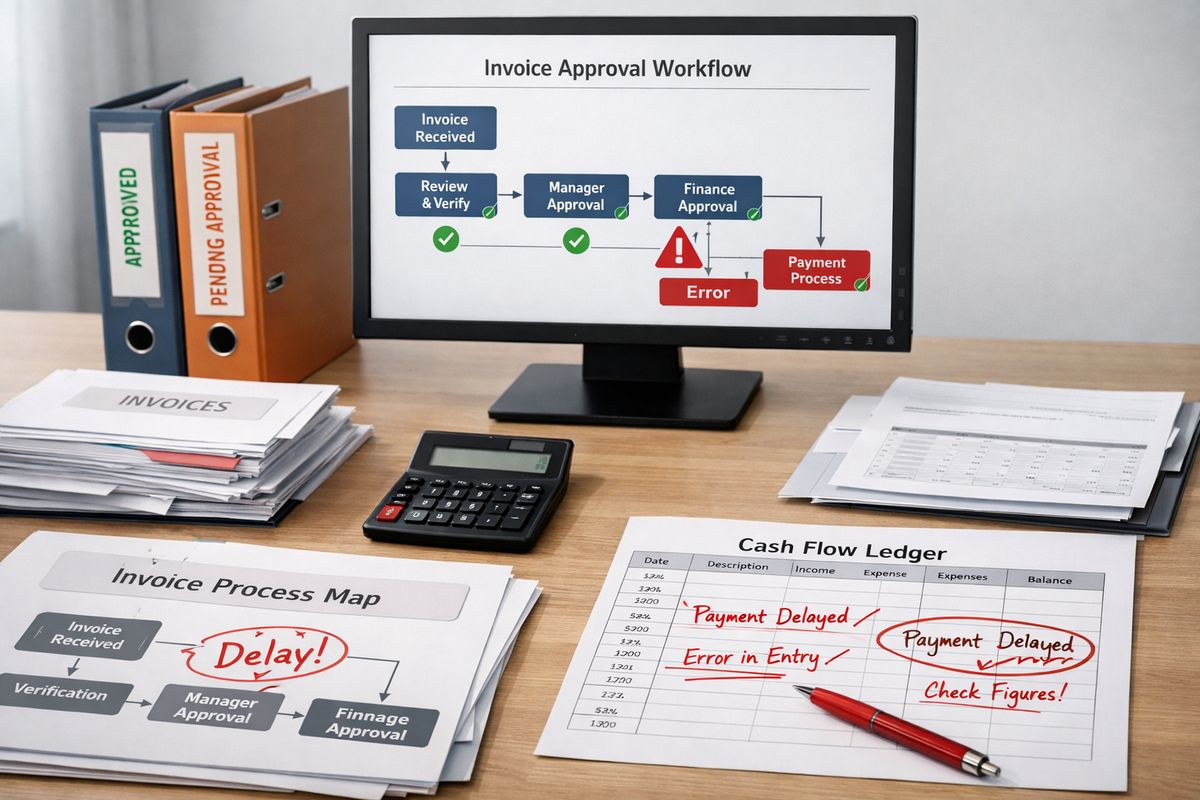
The Four-Part Business Case: Baseline, Cost, Impact, Payback
A credible automation case follows a simple sequence: measure current performance, capture the full cost, quantify the improvement, then calculate payback and ROI. Simple does not mean superficial. It means disciplined.
Use the standard formula: ROI = [(Financial Benefit, Automation Cost) / Automation Cost] x 100. Then pair that with payback period, because many decision-makers care more about how many months it takes to recover the spend than about the percentage alone.
If you are reviewing what to automate first, this framework keeps you focused on processes that can actually prove value rather than projects that simply sound modern.
Start With the Baseline: Measure the Process Before You Automate
Weak baselines destroy automation proposals. If you cannot show the current cost and current friction, you cannot prove improvement later.
Start with the process as it exists today. Measure processing time, cost per transaction, number of handoffs, exception rate, error rate, rework, delays, and total team effort. If the process crosses departments, document each transfer point. That is usually where waste hides.
For finance and admin workflows, baseline metrics often include cost per invoice, approval turnaround time, reconciliation effort, days to close, and number of exceptions requiring manual review. That is not just good practice. It matches how 34.2% of finance teams already evaluate automation performance.
Capture the Full Cost, Not Just the Software Fee
The software subscription is only one line in the investment. If you ignore the rest, your ROI model is inflated before the project even starts.
Count licence fees, implementation, integrations, process redesign, training, support, internal project time, testing, change effort, and ongoing governance. Include management time as well. If your finance lead, operations manager, and admin team spend weeks cleaning master data and validating workflows, that is real cost.
This is where many SMEs understate the budget and then lose confidence halfway through rollout. A realistic model makes approval easier because it signals control. If your business is connecting accounting, approvals, and operations, the total cost view becomes even more important. That is exactly why connecting finance and operations in one flow usually delivers stronger returns than buying isolated tools that create extra handoffs later.
Translate Operational Gains Into Financial Outcomes
Saved hours matter, but labour reduction is only the starting point. The bigger value often sits in better timing, fewer losses, and stronger commercial performance.
If invoice approval drops from five days to one, supplier relationships improve and cash planning becomes more accurate. If billing happens faster, receivables move sooner and cash enters the business earlier. If automation cuts exception handling and duplicate entries, you protect margin and reduce audit risk. If dashboards update in real time, poor performance gets spotted before the month is gone.
This is where Prodyssey Solutions takes a smarter position than a typical software-first approach. When finance, technology, and operations work as one, automation produces better data, faster decisions, and tighter control across the business. That is the return you should model.
The Metrics That Prove Automation ROI
Not every KPI deserves space in the business case. Focus on the ones that directly show efficiency, control, and financial impact.
Cost, Speed, Accuracy, and Exception Rates
These are the foundation metrics because they are visible, measurable, and hard to argue with. Cost per invoice, processing time, throughput, touchless processing rate, error rate, and exception rate tell you if the process is genuinely improving.
Use pre and post figures. If manual invoice handling costs €8 per invoice and automation brings it to €3, the benefit is obvious. If the exception rate drops from 18% to 6%, manual intervention falls and team capacity rises. If touchless processing climbs, the workflow is becoming scalable.
Partial automation often looks good in demos and weak in practice. Research shows 54.2% are only partially automated. That usually means manual checks still sit inside the process, limiting throughput and diluting ROI.
Cash Flow, Revenue Protection, and Better Decisions
This section is where stronger business cases separate themselves from shallow ones. Automation does not just cut admin effort. It also protects revenue and improves commercial performance.
Marketing automation benchmarks are a good example. Businesses generate $5.44 for every $1 spent over three years, and many see positive returns in the first year. That return comes from faster lead response, better nurturing, fewer missed follow-ups, stronger conversion, and shorter sales cycles.
The same logic applies outside marketing. Customer feedback automation can prevent churn. Faster collections workflows reduce leakage. Better visibility over pipeline and receivables improves decisions before problems hit the P&L.
Compliance, Auditability, and Trust in Automated Workflows
Finance leaders fund automation for control as much as for speed. That is the right discipline.
An automated process should leave a clear audit trail, enforce approval rules, surface exceptions, and improve data quality. If a transaction cannot be explained, trusted, or reviewed, the process has failed regardless of how fast it runs. Research shows 35.8% of finance respondents say trust breaks down without explainability. Again, right priority.
For SMEs dealing with growth, multiple approvers, and rising transaction volume, trust is not a side issue. It is the condition that allows automation to scale.
Where Automation Delivers the Fastest Return
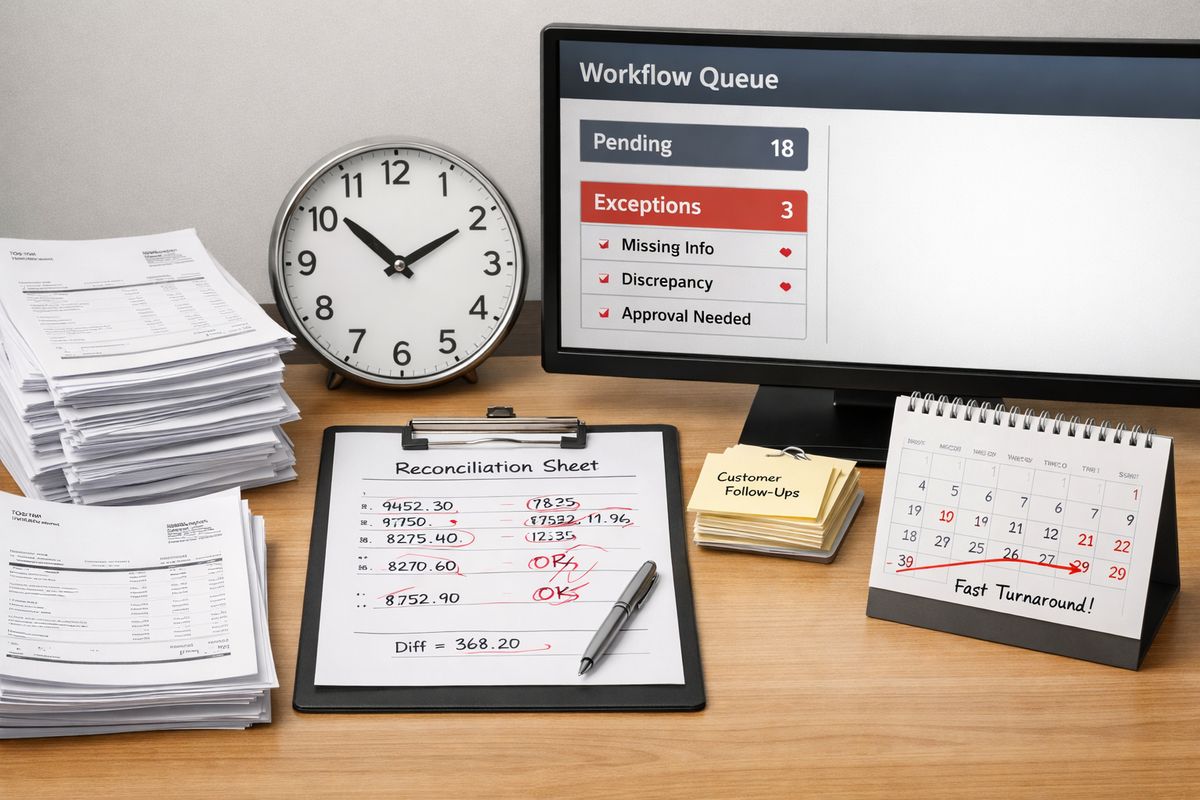
The fastest returns usually come from high-volume, repetitive, cross-functional workflows. Start there.
Finance and Document Workflows
Invoice processing, approval routing, reconciliations, expense handling, document capture, and management reporting are strong first candidates because the baseline is easy to measure and the waste is obvious. Document automation regularly delivers 200% to 400% first-year ROI, with payback in three to six months. Invoice automation is often cited around 280% ROI with roughly five months payback.
That speed of return is one reason finance automation deserves early priority. It creates immediate savings, but it also improves visibility over liabilities, approvals, and reporting.
Customer, Sales, and Marketing Processes
Customer-facing workflows can also produce fast returns, especially where response speed matters. Automated follow-up, survey workflows, customer service chat, lead nurturing, and feedback escalation all improve performance in measurable ways.
Survey automation is a good example. Research reports 412% median first-year ROI when labour savings, churn prevention, and review generation are included. That sounds aggressive until you remember where the value comes from. The biggest gain is usually not admin efficiency. It is retained customers.
Connected Workflows Beat Isolated Tools
This is where many investments stall. A point solution fixes one task but leaves the rest of the journey manual. Data then gets copied between systems, approvals happen in inboxes, and reporting still depends on spreadsheets.
Connected workflows perform better because the same data moves through finance, operations, and customer processes without rekeying or delay. If you want stronger long-term return, prioritise joined-up accounting and operational workflows over isolated automations that create one local gain and three downstream problems.
Common Mistakes That Weaken the ROI Case
Most failed automation business cases are not killed by the technology. They are killed by poor commercial logic.
Using Vague Benefits Instead of Measurable KPIs
“Better productivity” is not a business case. “Reduce invoice processing cost from €7.40 to €3.10 within four months” is.
Tie every claimed benefit to a baseline, a target, a time frame, and an owner. If a benefit cannot be measured on a dashboard, it should not sit at the centre of your approval request.
Ignoring Adoption, Exceptions, and Process Design
Bad processes do not improve because you automate them. You just make the confusion faster.
Adoption matters. Exception handling matters. Approval logic matters. Before scaling, simplify the workflow, define who owns exceptions, and prepare the team for the change. If that part is weak, returns collapse. For a deeper look at the human side, review how to get teams using new workflows.
Treating Automation as a Standalone IT Purchase
Automation fails when finance, operations, and technology are managed separately. The strongest ROI comes from a single operating model: one process design, one source of truth, one control framework.
That is especially relevant for businesses trying to improve visibility across payables, approvals, jobs, projects, or customer activity. If the systems remain disconnected, the ROI remains partial.
How to Build a Credible Automation ROI Plan for Your Business
Start with one process. Pick something high-volume, repetitive, error-prone, and easy to measure. Define the baseline, price the full investment, set target KPIs, run a pilot, and measure payback with discipline. Then expand based on evidence, not enthusiasm.
That approach is practical for SMEs in Cyprus and Greece because it protects cash, limits execution risk, and creates internal confidence quickly. It also gives you a clearer path to connected operations, real-time control, and better financial visibility.
What a Strong First Use Case Looks Like
A strong first use case sits in the overlap between pain and measurability. Invoice approvals. Expense handling. Monthly reporting packs. Credit control follow-up. Customer enquiry routing. Sales lead response.
Choose a workflow where delays are visible, the manual effort is recurring, and the performance change will show up quickly in hours saved, errors reduced, or cash moved faster.
The Questions to Ask Before You Invest
Use this checklist before approving any automation spend:
- What is the current cost of the process?
- Where do delays and errors occur?
- Which systems must connect?
- Which KPIs will prove success?
- How quickly will payback show?
If those answers are clear, your automation ROI case is ready for serious review. If not, the project is not ready yet. Build the numbers first, then fund the workflow that gives your business tighter control and faster results.
Leave a Reply