
Change management decides whether automation becomes a control advantage or an expensive disruption. In practical terms, change management is the work of getting new systems, workflows, approvals, and habits adopted across your business so finance and operations run in one connected rhythm, not in separate manual loops. This guide shows what that looks like, why most automation programmes stall, and how to make adoption stick.
What Change Management Means in an Automation-First Business
In an automation-first business, change management is not a soft side task. It is the operating discipline that turns a new platform, integration, or workflow into daily behaviour. If your team still exports spreadsheets, chases approvals on WhatsApp, and fixes errors at month-end, the system is not live in any meaningful business sense.
For an SME, success is simple to recognise. Data is cleaner. Approvals move faster. Cash flow is visible earlier. Managers trust the dashboard because the process behind it is standardised. That is why automation belongs in the control agenda of your CFO or owner, not in a narrow IT rollout plan.
Change Management vs System Implementation
System implementation installs software. Change management changes work.
That distinction matters because software can go live on Friday and still fail on Monday. If purchase approvals still sit in inboxes, stock data is entered differently by each team, and finance still reworks operational numbers before closing the month, your project delivered activity, not value.
Automation delivers ROI only when roles, rules, reporting habits, and handoffs change with it. If you are evaluating platforms, start with the business process and the ownership model, not just the feature list. That is also why a strong rollout plan should sit beside a clear view of how to prove the return on automation.
Why This Matters for SMEs in Cyprus and Greece
SMEs in Cyprus and Greece operate with lean teams, tight reporting cycles, and very little room for duplicated work. Finance often sits in one system, operations in another, and key decisions happen in between through calls, messages, and spreadsheets. That structure slows approvals, weakens visibility, and creates preventable friction between the office and the operational team.
Pressure is rising from every direction: margin control, supplier costs, faster reporting, and the need for better oversight without adding headcount. In that environment, automation is not about novelty. It is about connecting accounting and operations into one live view so your business can move faster with fewer errors. That is the kind of connected control Prodyssey Solutions is built to support.
Why Automation Fails Without Strong Change Management
The commercial risk is blunt: 60 to 70% of change initiatives fail. Poor change management destroys value long before the software itself becomes the issue. Teams do not understand the purpose, managers do not reinforce the new process, and leaders treat launch as the finish line.
The gap between good and bad execution is huge. Prosci reports an 88% success rate for organisations with excellent change management, compared with 13% for poor practice. That is the difference between a working operating model and a sunk software cost.
The Real Cost of Poor Adoption
Poor adoption looks expensive in very ordinary ways. Your team duplicates work in old and new systems. Month-end close slows down because exceptions are still fixed manually. KPIs stop matching across departments. Cash flow visibility arrives too late to act on.
Then the familiar fallback appears: spreadsheets. Once that happens, your source of truth is gone, your control environment weakens, and confidence in the project drops fast. This is not just a people problem. It is a business control problem with direct impact on reporting speed, forecasting, and operating discipline.
The Most Common Barriers to Change
The biggest barriers are predictable. Lack of trust, unclear purpose, weak leadership, and skills gaps sit at the top. Research also shows change fatigue is widespread, with employees overwhelmed and managers often unequipped to lead change properly.
Automation adds another layer. Legacy systems, siloed teams, fragmented data, and inconsistent adoption across departments break momentum. In AI-enabled workflows, regulation and governance concerns slow progress further. UK research found that many businesses have not identified a use case at all, while others lack the internal skills to implement confidently. That means the failure often starts before rollout.

The Business Case: What “Automation That Sticks” Looks Like
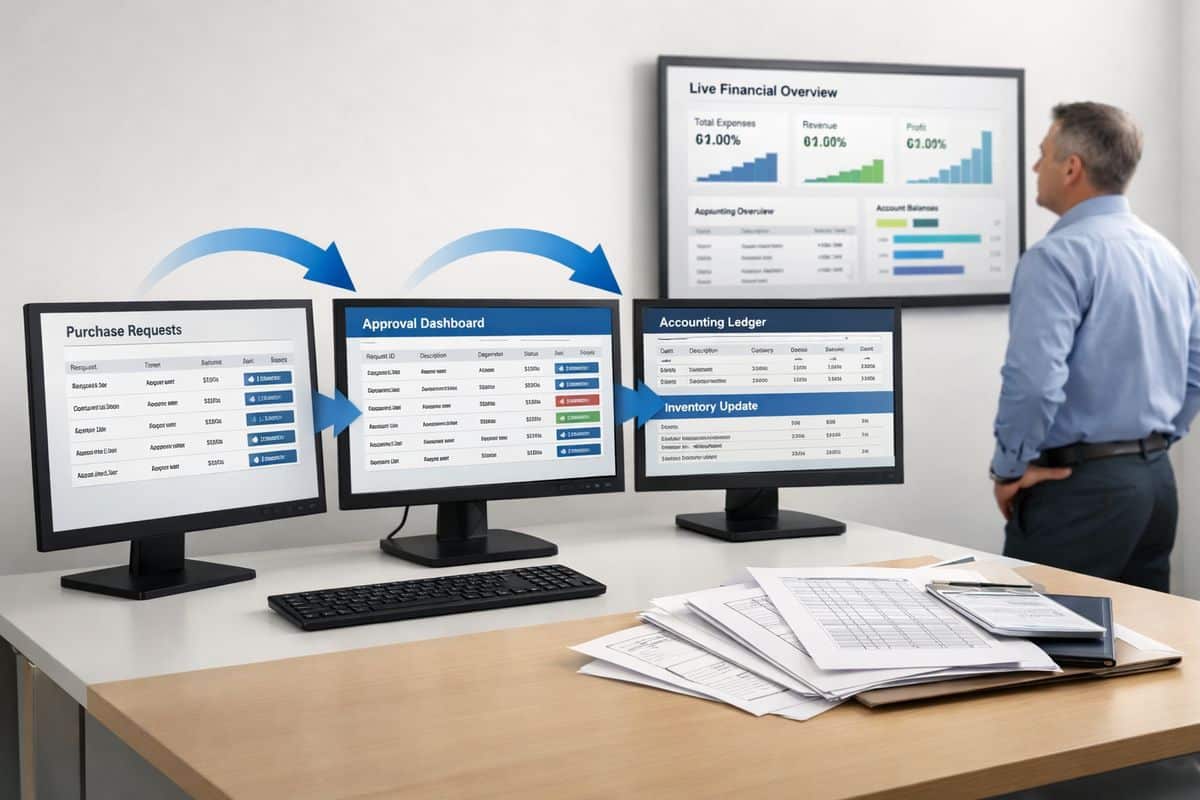
Automation that sticks creates one source of truth across finance and operations. Purchase requests follow standard paths. Supplier invoices move through automated checks and approvals. Live dashboards show the same numbers to operations, finance, and leadership. Decisions happen earlier because the data arrives earlier.
This is the end state worth funding. Not more software. Better control.
Outcomes You Should Expect
You should expect faster approvals, fewer manual errors, less rework, and stronger cash flow control. You should see clearer KPI tracking, better forecasting, and faster time-to-value from the new system. Most of all, you should see less effort spent reconciling what happened and more effort spent managing what happens next.
For most SMEs, the fastest gains come from focusing on a short list of high-impact processes worth automating first, then expanding once teams trust the new workflow.
Signs Your Organisation Is Ready to Scale
Readiness is visible before launch. Process ownership is clear. Data definitions are agreed. Sponsors are active, not passive. Managers understand what changes in each role. Training is planned. Success metrics cover adoption and business outcomes, not just go-live dates.
If those basics are missing, scaling creates noise, not momentum.
A Practical Change Management Framework for Automation Projects
A decisive framework for automation has five stages: prepare, plan, implement, embed, review. Simple. Disciplined. Effective.
1. Prepare the Business for Change
Start by mapping how work happens now, not how it is supposed to happen. Identify handoffs between accounting and operations, manual approvals, duplicate entry, unclear ownership, and reporting delays. Then assess team capacity. A stretched team will not absorb major process change without something else being simplified.
This stage also shows where control gains are strongest. Often that means payables, purchasing, job costing, stock movements, or management reporting. If you need a sharper lens on sequence, focus first on where SMEs save time fastest.
2. Build a Clear Vision, Business Case, and Success Metrics
Your business case must be commercial, not technical. Define the change in terms of cash flow visibility, faster approvals, cleaner reporting, margin protection, and better decisions. If your team cannot explain the value in two sentences, adoption will stall.
Set project metrics and adoption metrics side by side. Track go-live, but also track usage rates, exception volume, cycle times, and close speed. Research shows KPI tracking materially improves change success, because it keeps the focus on outcomes rather than activity.
3. Implement with Visible Leadership and Fast Wins
Roll out in phases. Pilot first. Prove value early. McKinsey-linked research shows digital change is 3 times more likely to succeed when piloting and prototyping are used to build skills before scaling.
Leadership visibility matters just as much. Sponsors must repeat the same message consistently: why this matters, what changes now, and what business result it drives. Managers must own the first line of follow-through. If communication is vague, resistance fills the gap.
4. Embed New Habits into Daily Operations
Automation sticks when it becomes the default path. That means SOPs, approval rules, dashboard routines, and role clarity are all updated to match the new process. Old workarounds must be removed quickly. If the old spreadsheet remains easier than the new workflow, your team will go back to it.
Reinforcement also matters after go-live. Prosci reports that sustainment planning strongly improves outcomes. In practice, that means regular management reviews, visible usage tracking, and quick corrective action when teams fall back into manual habits. For a deeper look at reinforcement, see what drives real adoption after launch.
5. Review Adoption, Performance, and ROI
Go-live is the start of the evidence phase. Review usage rates, manual touches, exception rates, close speed, forecast accuracy, and stakeholder feedback. Compare the original business case with real operating performance.
Then optimise. Fix approval bottlenecks, refine dashboards, retrain weak teams, and tighten controls where exceptions repeat. Mature automation improves through iteration, not celebration.
Leading People Through Automation Without Slowing the Business
The human side of automation is not about making everybody feel comfortable. It is about making change clear, manageable, and worth the effort. That is how you reduce resistance without losing pace.
How to Communicate Change So Teams Act on It
Good communication answers three points with zero ambiguity: why the change is happening, what changes in each role, and what result the business expects. Keep it concrete. “Invoices will no longer be approved by email. Approval thresholds will sit in the workflow. Finance will see liabilities earlier. Managers will see pending approvals live.”
Abstract messages fail because nobody can translate them into action. Clear timelines help too. Research shows success rates rise sharply when implementation timing is communicated properly.
How to Handle Resistance and Change Fatigue
Resistance usually comes from four places: low trust, weak awareness, fear, and overload. Deal with each directly. Show the business reason. Demonstrate the workflow. Remove duplicate work fast. Pace the rollout so teams are not carrying old and new processes for too long.
Change fatigue is real, especially in businesses already juggling system upgrades, reporting pressure, and staffing gaps. Keep the programme narrow enough to win. A focused workflow with visible value beats a broad transformation that exhausts the business.
Why Managers Make or Break Adoption
Managers turn strategy into routine. If a manager tolerates off-process approvals, late entries, or side spreadsheets, adoption collapses at team level. If a manager reviews the dashboard, follows escalation paths, and reinforces the new process daily, adoption stabilises fast.
This is where many projects fail. Research shows managers are often not equipped to lead change. Fix that early with coaching, simple scripts, and clear ownership of metrics.
Governance, Controls, and Human Oversight in Automated Workflows
Trust grows when automation is reliable, auditable, and controlled. That is why governance strengthens adoption instead of slowing it down.
Set Rules for Data Quality, Approvals, and Exceptions
Define master data standards, approval thresholds, exception handling rules, and ownership of corrections. Every automated workflow needs an audit trail and a named owner for broken records, supplier changes, and failed approvals.
Without those controls, speed creates mess. With them, speed creates confidence.
Keep Human Oversight Where It Protects the Business
Automation does not remove accountability. It moves human attention to the points that matter most: financial exceptions, unusual supplier changes, high-value approvals, and sensitive AI outputs. UK AI research shows 84% of AI-using businesses still apply human checking, which is exactly right.
The goal is not full autonomy. The goal is controlled automation with clear review points.
Connecting Finance and Operations for Lasting Change
Lasting change happens when finance and operations stop working on different timelines. If one side acts in real time and the other catches up later, your reporting will always lag behind your business.
Break the Spreadsheet Handoffs
Disconnected teams create delays, errors, and blind spots. Purchasing enters one number, operations changes it, finance corrects it later, and nobody trusts the final report. Integrated workflows replace that chain of rework with one controlled process. That is the logic behind linking finance and operations in one workflow layer.
Create One Performance View Across the Business
Shared dashboards create shared accountability. Purchasing, stock, sales, fulfilment, and finance should work from one performance view with the same definitions and timing. That is how you spot margin pressure earlier, manage cash with confidence, and hold teams to the same operational truth.
A Change Management Checklist for Your Next Automation Rollout
A strong rollout is rarely complicated. It is disciplined. Before launch, force clarity. After go-live, force measurement.
Questions to Ask Before You Launch
Use this checklist before approving rollout:
- Is the business case tied to cash flow, speed, control, or margin?
- Are current process gaps mapped across finance and operations?
- Are data definitions and approval rules agreed?
- Is sponsor ownership visible and active?
- Are managers prepared to reinforce the new process?
- Is training role-based and scheduled?
- Are governance and exception rules documented?
- Are success metrics defined beyond go-live?
Metrics to Track After Go-Live
Track the numbers that show if change is real:
- Adoption rate by team
- Processing time
- Manual touches
- Exception volume
- Reporting speed
- Cash flow visibility
- Forecast accuracy
- Realised ROI
Treat change management as part of your operating model, not a layer on top of it. When finance, technology, and operations move as one, automation stops being a project and starts becoming business control. That is the standard Prodyssey Solutions helps ambitious businesses build.
Leave a Reply