
If you want the right processes to automate first, stop thinking about flashy tools and start with friction. In a growing SME, the best first automations are repetitive, rules-based, high-volume workflows that connect finance and operations, tighten control, and pay back fast, especially when growth in Cyprus and Greece is exposing every spreadsheet gap and approval delay.
What to prioritise before you automate anything
Automation earns its keep when it removes repeated manual effort, cuts error rates, improves cash flow, and gives you live visibility across teams. That means you should prioritise processes that happen often, follow clear rules, and already have an owner. If a workflow changes every week, depends on judgment calls, or lives inside six disconnected apps, fix that first.
The market is already moving this way. The BPA market reached $16.32 billion in 2025 because organisations are automating the work that slows operations, finance, and decision-making.
Focus on processes with clear rules and measurable outcomes
Your first automation wave should target standard approvals, predictable data handoffs, and repeatable transactions. That is where you get clean before-and-after KPIs: shorter billing cycles, fewer approval bottlenecks, lower processing cost, faster close, better debtor control.
If you cannot define the trigger, the steps, the approver, and the success metric, you are not ready to automate that process.
Avoid automation debt from disconnected tools
One-off tools create hidden cost. Data gets duplicated, reporting stops matching, and teams start trusting spreadsheets more than systems. Worse, fragmented stacks can consume up to 40% of automation budgets in maintenance rather than improvement.
That is why connected workflows matter. Your accounting platform, approvals, CRM, and dashboards should work as one operating layer, not as separate islands. This is exactly where Prodyssey Solutions positions automation properly: finance, technology, and operations connected in one view.
1. Sales invoice creation and dispatch
If billing is slow, cash is slow. This is one of the strongest places to start because the trigger is usually obvious: completed work, delivered goods, approved timesheets, signed quotes, or recurring subscriptions.
What the workflow should automate
Your workflow should generate the invoice automatically, pull the correct customer and tax data through, apply approval rules where needed, send the invoice, and track status. No rekeying. No PDF chasing. No “finance will do it later”.
Business result to highlight
You shorten billing cycles, reduce manual errors, improve debtor control, and see outstanding revenue in real time. You also make month-end easier because invoice data is already clean and posted correctly.
2. Accounts payable and supplier invoice processing
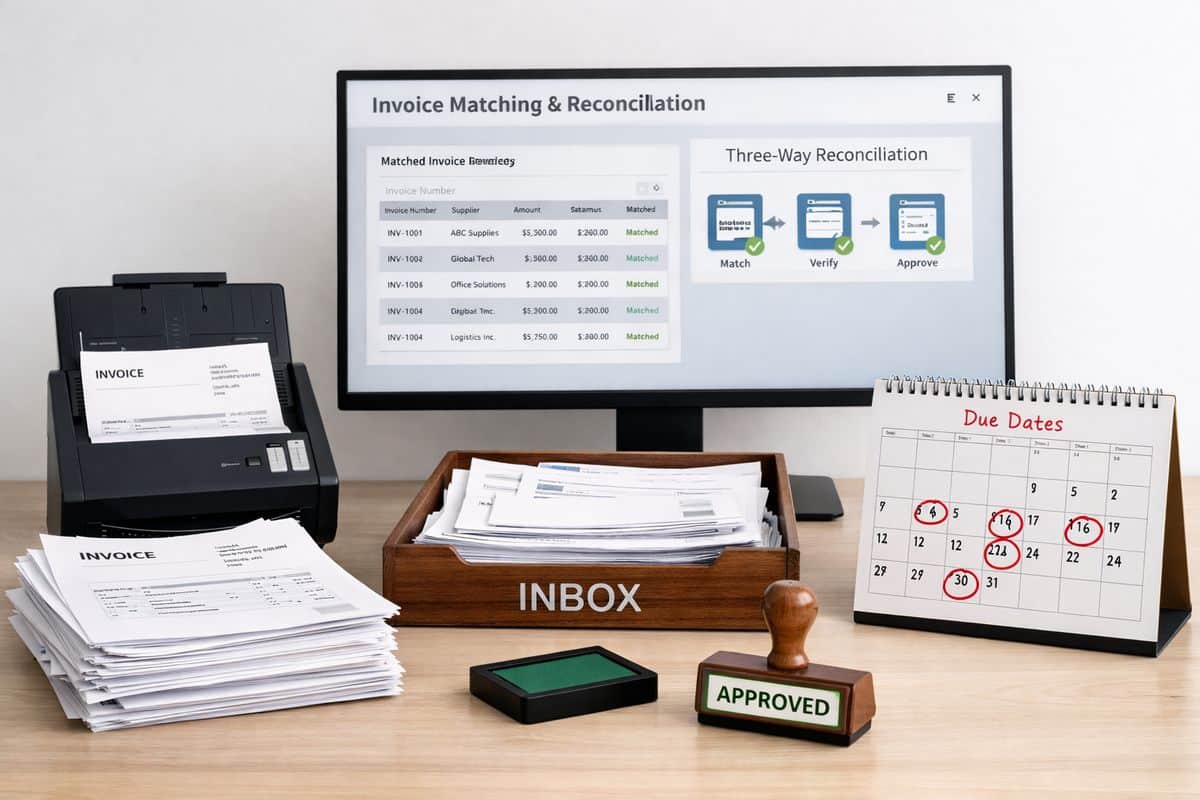
Accounts payable is one of the biggest admin drains in a growing SME. Supplier invoices arrive in every possible format, coding is inconsistent, approvals get stuck, and payment timing becomes reactive instead of controlled.
Where growing SMEs lose time
The waste is predictable: emailed PDFs, manual data entry, missing approvers, duplicate invoices, and poor visibility over what has been committed but not yet paid. This is why intelligent document processing is such a sensible early target for invoice-heavy workflows.
Why this matters to CFOs and controllers
AP automation gives you invoice capture, coding rules, approval routing, three-way matching, and payment scheduling with full audit history. Gartner data shows 58% of finance leaders had already adopted RPA for accounts payable, because the payoff is direct: tighter cash planning, cleaner controls, and live committed-spend visibility.
If your wider goal is connecting payables with operational approval flows, this is where linking finance and day-to-day execution starts to matter.
3. Expense claims and spend approvals
Expense claims are small transactions with oversized admin. Staff wait for reimbursement, finance spends time checking receipts, and policy breaches slip through because reviewing everything manually is too slow.
Build policy enforcement into the workflow
Automate receipt capture, expense categories, VAT treatment, approval thresholds, and exception flags. If mileage exceeds policy or a claim lacks a receipt, the workflow should stop automatically and route it correctly.
KPI gains to mention
You reduce processing time, cut policy breaches, improve posting accuracy into the accounting system, and lower admin cost per claim. Just as importantly, managers stop approving blindly because the workflow shows what matters.
4. Lead capture, qualification, and routing
Revenue problems often start before the sale. If leads sit in inboxes, get assigned late, or never reach the right person, your pipeline becomes unreliable and your forecasts become fiction.
Connect front-office activity to revenue visibility
Automate form capture, CRM updates, lead scoring, and ownership assignment. That gives you faster response times, cleaner pipeline data, and a stronger handoff from commercial activity into delivery and finance forecasting.
Keep the process practical, not overengineered
Start with source, company size, sector, geography, and service fit. That is enough to route leads properly. Complex scoring logic belongs later. In early-stage automation, simplicity wins because it stays usable and trusted.
5. Customer onboarding and account setup
Customer onboarding is where revenue either accelerates or stalls. A signed deal means nothing if contracts are missing, account setup is delayed, or delivery teams lack the information to start.
Key steps to automate
Automate contract collection, KYC or compliance checks where relevant, account creation, credit terms setup, document requests, and internal handoffs between sales, finance, and operations.
Why this is a control issue, not just an admin issue
This is not paperwork. It is risk control, data quality, and time to revenue. Good onboarding means clean customer master data, fewer billing disputes later, and faster delivery starts. For any business trying to connect sales promises with operational execution, this is one of the clearest wins.
6. Purchase orders and internal approval workflows
Purchase order automation gives you control before money leaves the business. That matters even more when you operate across sites, departments, or multiple managers.
Replace email chasing with rule-based approval paths
Build approval paths based on budget owner, department, supplier type, and order value. Add escalation rules so requests do not sit untouched because someone is on leave or buried in email.
Strengthen budget control with live data
Approved commitments should feed directly into reporting. That reduces maverick spend, improves forecast accuracy, and gives you a live view of budget exposure before invoices even arrive. If you are comparing systems, start with how to assess connected workflow tools, not feature lists alone.
7. Bank reconciliation and payment matching
Manual bank reconciliation burns time and hides issues. Finance teams end up matching transactions line by line, chasing remittance advice, and relying on spreadsheet checks to understand cash.
Where automation saves time and reduces risk
Automate matching for recurring receipts, supplier payments, card transactions, and standard customer remittances. Keep exception handling visible so unusual items still get reviewed properly.
Link this to real-time control
You get a more accurate cash position every day, a faster close, earlier issue detection, and far less dependence on manual review. For SMEs aiming at real-time accounting, this is foundational.
8. Management reporting and live KPI dashboards
Manual reporting slows decision-making because every number arrives late. By the time the report is built, the problem has already moved.
Reports that should update automatically
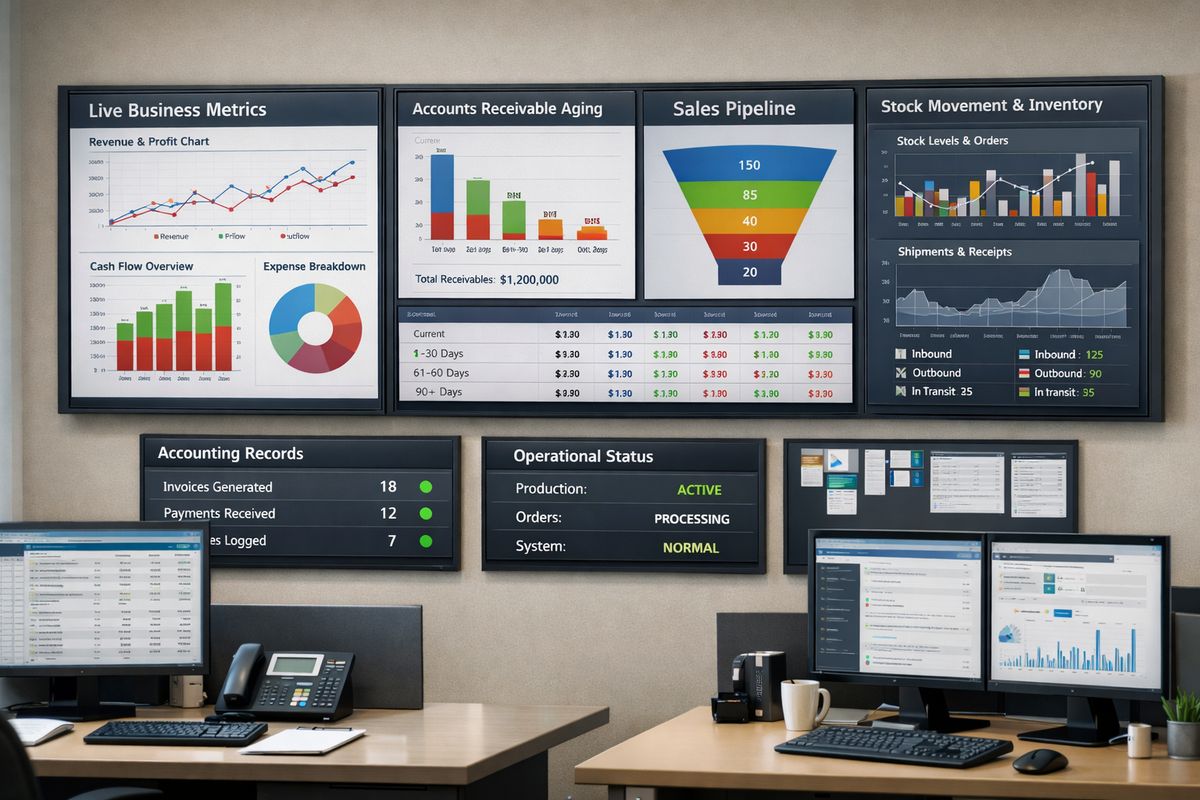
Cash flow, aged receivables, gross margin, sales pipeline, stock performance, project performance, and departmental KPIs should update automatically from connected systems. Reporting automation alone can save teams 10 to 15 hours per week when dashboards replace manual compilation.
Move from static reports to operational visibility
A dashboard is valuable only when it connects accounting and operations. You should be able to see margin pressure, cash exposure, approval bottlenecks, and delivery issues in one place, then act immediately. That connected model sits at the centre of bringing accounting and operations into one workflow.
9. Employee onboarding, leave requests, and HR admin
HR admin is repetitive, document-heavy, and full of handoffs. That makes it an ideal early target. The value is not just speed. It is consistency, compliance, and fewer payroll errors.
Start with the highest-friction admin tasks
Automate offer documentation, starter checklists, payroll data collection, leave approvals, and policy acknowledgements. These workflows follow clear rules and involve multiple internal stakeholders, which is exactly where automation works best.
Business benefits beyond HR
You improve compliance, payroll accuracy, manager accountability, and the employee experience from day one. Market research consistently identifies HR as one of the main process areas being automated, and for good reason: the admin load is high and the rules are clear.
10. Customer support triage and routine service requests
This is one of the best late-first-wave automations because it improves service without trying to replace people. You automate the routing and routine handling, then keep human attention for the complex work.
Best-fit use cases for first-stage automation
Start with order status requests, appointment confirmations, document requests, password resets, and issue categorisation. These requests are repetitive, predictable, and easy to standardise.
Protect service quality while reducing workload
You get faster first response, stronger SLA performance, cleaner case data, and more team capacity for high-value customer issues. That balance matters. Automate the standard path, not the whole customer relationship.
How to choose the right first three for your business
Do not pick based on vendor demos. Score each process by transaction volume, manual hours, error frequency, cash flow impact, compliance exposure, and integration readiness. The right shortlist usually becomes obvious very quickly.
Use a simple impact-versus-complexity filter
Choose the workflows with visible ROI and low implementation friction. High-volume invoice processing usually beats a complex customer portal rebuild. Approval automation usually beats a full ERP overhaul. Keep the first wave practical.
Prioritise workflows that connect finance and operations
The best first automations give you cleaner data, faster execution, and one connected view of performance. If you want a broader framework, start with where growing firms save time fastest.
Common mistakes that slow SME automation
Most failed automation projects fail long before go-live. The problem is usually bad process choice, weak ownership, fragmented tools, or no success metrics.
Do not automate exceptions before the standard path
Edge cases are seductive because they are painful. Ignore that instinct. Automate the core path first, make it reliable, then handle exceptions. Stable, repeatable, rule-based work should always come first.
Build governance and security in from the start
Approval controls, access rights, audit trails, and cyber protection belong in the design, not in a later clean-up phase. That matters even more when 70% of medium-sized businesses have faced cyber-attacks in the past year. If you skip governance, you do not have automation, you have faster risk.
What success looks like after the first automation phase
After the first phase, your close cycle is faster, cash control is tighter, approvals stop stalling in email, customer response times improve, and your dashboards show what is happening now rather than what happened last month. That is the real benchmark.
The point is not isolated task savings. The point is a scalable operating model with connected finance and operations, live visibility, and less manual work at every handoff. That is how Prodyssey Solutions helps growing businesses move from spreadsheet-led management to real-time business control.
Leave a Reply