
Choosing a workflow automation platform feels deceptively simple until finance, approvals, reporting, and operations all need to work together. At that point, a basic automation tool stops being enough. This guide shows you what belongs on a serious shortlist, what to ignore, and how to choose a platform that gives you control across your business.
What Belongs on Your Workflow Automation Platform Shortlist
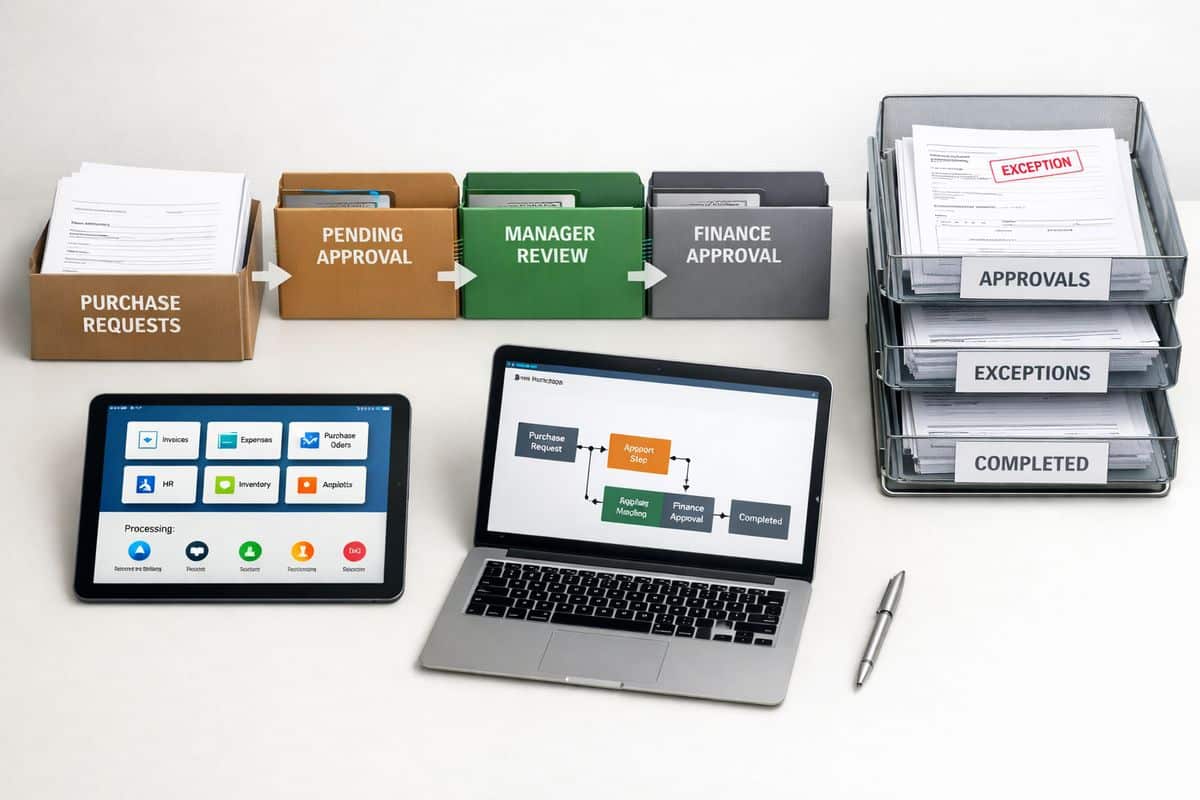
A workflow automation platform is not just a tool for sending notifications or moving tasks from one inbox to another. It is the operational layer that routes work, enforces approvals, connects systems, and gives you live visibility into what is happening across finance, people, and day-to-day execution.
That distinction matters. If you are managing an SME in Cyprus or Greece, your real requirement is not “automation” in the abstract. Your real requirement is a managed flow between front-office activity and back-office finance: purchase requests into approvals, approvals into accounting, accounting into reporting, and reporting into decisions. A shortlist only becomes useful when it is built around that outcome.
Why This Category Now Demands Board-Level Attention
Workflow automation now sits firmly in mainstream business planning. By 2024, 89% of organisations had adopted or planned to adopt it. That is not a niche technology trend. It is a control strategy.
The business case is straightforward. Automation cuts cycle times, reduces manual rekeying, improves consistency, and exposes bottlenecks before they hit cash flow. Reported results are hard to ignore: average process cycle times fall by 50 to 70 percent, and ROI often lands in the 200 to 300 percent range within 12 months. For a CFO or financial controller, that translates into faster approvals, cleaner data, tighter receivables follow-up, and fewer unpleasant surprises at month end.
SMEs are accelerating as well. While large enterprises still dominate spend, SME growth is outpacing the rest of the market because low-code platforms and pay-as-you-grow pricing have removed the old barrier of heavy IT dependency. The category now deserves board-level attention because the impact is no longer limited to admin efficiency. It affects cash, margin, accountability, and speed of decision-making.
The Buying Criteria That Decide Long-Term Value
A strong platform earns its place over years, not during the first demo. The difference comes down to integration, control, visibility, and how well the platform handles real business complexity once you scale beyond one simple workflow.
Integration Depth Across Finance and Operations
Your platform must connect accounting software, ERP, CRM, payroll, procurement, inventory, banking, and spreadsheets without fragile patches. If every handoff depends on exports, manual uploads, or one person “checking the numbers,” your automation is already broken.
This matters even more when you are trying to align finance and operations. Sales activity affects invoicing. Procurement affects cash planning. Delivery status affects revenue timing. If those data flows stay disconnected, automation just moves bad information faster. That is why shortlisting should start with integration depth, not interface polish. This is also where a connected approach to finance and operations working together stops being theory and becomes a practical buying requirement.
Workflow Design, Approvals, and Exception Handling
Any platform can automate a straight line. The value shows up when the process stops being neat.
You need low-code workflow design, role-based routing, conditional logic, escalations, delegation rules, and a full audit trail. More importantly, you need exception handling. A purchase request above budget should follow a different route. A missing invoice attachment should pause the process. A late approval should escalate automatically. If the platform cannot manage these business rules cleanly, you are not buying a platform. You are buying a task tool.
Dashboards, KPIs, and Real-Time Visibility
Visibility is not a nice extra. It is a control mechanism.
You need live dashboards that show workflow status, approval delays, exception volumes, SLA breaches, and finance-linked KPIs. If a payable is stuck in approval for six days, you should see it immediately. If collections follow-up is inconsistent, you should spot it before cash flow gets squeezed. A workflow automation platform should make operational friction visible in real time, not after the damage is already in your monthly reports.
Governance, Security, and Compliance Control
Security and governance separate serious platforms from lightweight tools. Your shortlist should include permission control, version history, audit logs, policy enforcement, and structured access to sensitive data.
That is not just relevant for regulated sectors. It matters for any approval-heavy business where accountability matters. If you operate across entities, manage procurement formally, or need clear financial controls, governance is non-negotiable. Buyers now expect granular audit trails, encryption, and region-aware control as standard platform capabilities.
AI Readiness Without Losing Control
AI features are now everywhere. Most are not worth paying for.
Document extraction, anomaly detection, workflow suggestions, and decision support add value when they sit inside governed workflows with clear rules and human approval points. If AI produces outputs that nobody can explain, monitor, or override, it weakens control instead of improving it. Your standard should be simple: AI must accelerate execution while preserving accountability. Anything less is a risk dressed up as innovation.
Which Type of Platform Fits Your Operating Model
Not every platform category solves the same problem. Shortlisting gets easier once you match the category to your operating reality.
Low-Code Business Workflow Platforms
These platforms are built for speed. Operational teams can launch approval flows, onboarding, service requests, and internal finance processes without waiting for a full development cycle. They win on usability, fast deployment, and broad business adoption.
The trade-off is depth. Once you need complex cross-system orchestration, heavy data transformation, or deep legacy integration, these tools start to strain. For SMEs focused on quick operational wins, they are often the right starting point.
Integration-Led Automation Platforms
This category is strongest when your main problem is systems that do not talk to each other. These platforms connect apps, sync data, and trigger actions across accounting, CRM, e-commerce, payroll, and collaboration tools.
For businesses in Cyprus and Greece trying to eliminate manual rekeying between accounting and operations, this category often fits well. It is especially useful when your biggest pain is duplicated data and disconnected workflows. If you are assessing where automation saves time first, this is usually where immediate value appears.
Enterprise Orchestration and Hybrid Automation Suites
These platforms are designed for complexity. They coordinate processes across cloud apps, on-prem systems, shared drives, scheduled jobs, file transfers, and older applications.
That sounds enterprise-heavy, but it matters to growing mid-sized businesses too. Hybrid environments are now normal, and 88% of organisations report operating across both on-premises and cloud systems. If your business runs on a patchwork of modern and legacy tools, orchestration strength becomes a shortlist priority.
RPA-Heavy Platforms for Legacy Back-Office Work
RPA has a clear role: automating repetitive screen-based tasks where old systems have no usable APIs. That makes it effective for specific back-office gaps, especially in finance administration.
But RPA is not a complete workflow automation platform. It handles tasks, not end-to-end governed processes. Treat it as a tactical capability inside a broader platform strategy, not as the whole answer.
Your Buyer’s Shortlist: Best-Fit Platform Categories by Use Case
The right shortlist is based on fit, not brand popularity. Use case should drive the category.
Best for Connecting Accounting, Approvals, and Operational Workflows
Prioritise platforms that connect purchase approvals, invoicing, collections, budgeting, job costing, and fulfilment updates in one controlled flow. The best fit gives you clean data movement between operational activity and accounting, with live status and strong approval discipline.
For businesses pursuing real-time control, this is the model that matters most. It is also where partners such as Prodyssey Solutions position automation properly: as a connected layer between finance, operations, and reporting rather than a collection of disconnected tools.
Best for Fast SME Deployment and Citizen Development
If your priority is speed without a large IT team, shortlist low-code platforms with intuitive builders, reusable templates, straightforward integrations, and manageable governance. You want fast ownership by operational teams, but you still need structure around permissions, change control, and reporting.
The best option in this category delivers quick wins without creating a support burden every time a workflow needs to change.
Best for Hybrid Environments and Complex Multi-System Control
If your business runs a mix of cloud apps, local software, spreadsheets, file exchanges, and older systems, favour orchestration-led platforms. Central monitoring, failure recovery, scheduling, and resilience matter more here than visual simplicity alone.
This category fits businesses that have already outgrown light automation tools and need consistency across fragmented operations.
Best for Regulated or Audit-Heavy Processes
Where approval evidence, segregation of duties, and traceability matter, shortlist platforms with strong governance at the core. You need role-based controls, audit logs, versioning, and policy enforcement built into every workflow.
That matters in finance-led businesses especially. If control and accountability sit high on your agenda, your buying process should also include a clear view of the automation risks that derail projects.
Budget, Implementation, and Total Cost of Ownership
Licence price is only the visible part of platform cost. Real buying discipline starts when you look beyond the headline number.
What Drives Platform Cost
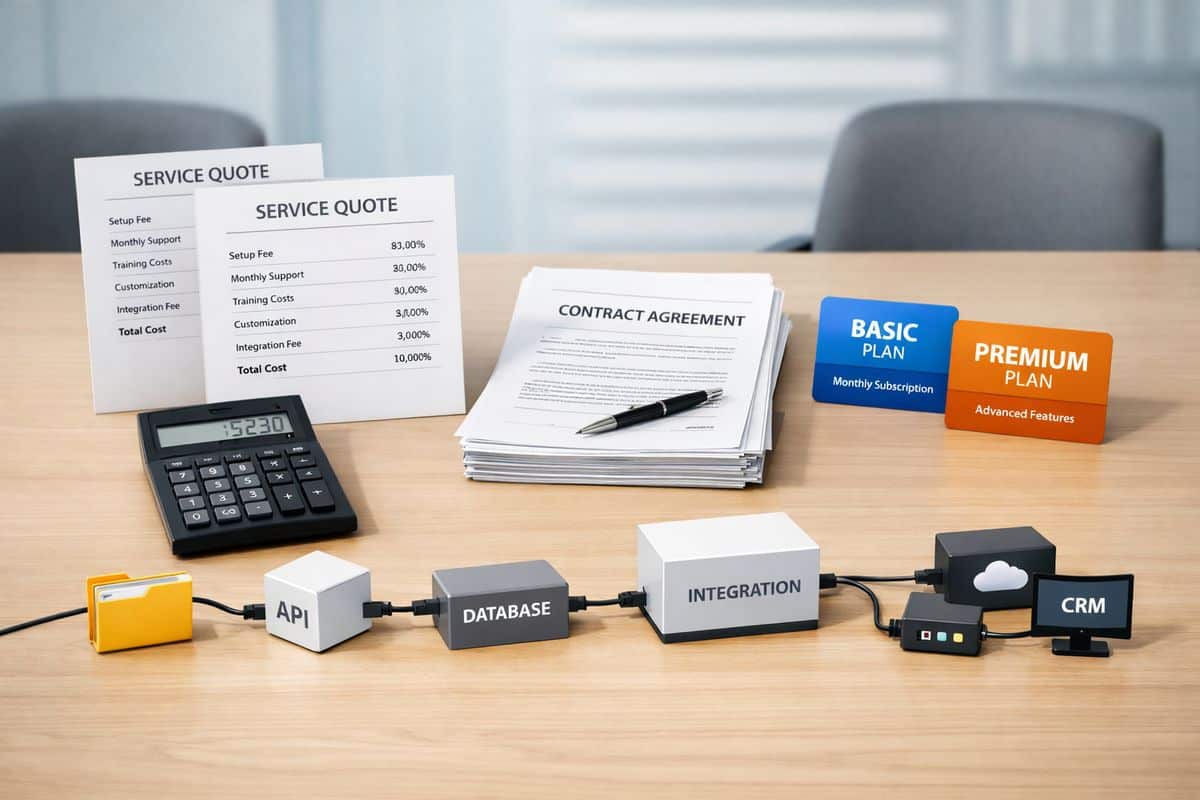
Cost is usually shaped by user count, workflow volume, automation runs, premium connectors, AI add-ons, support level, and environment complexity. Entry pricing often looks attractive because it excludes the features you actually need once adoption grows.
Implementation cost also changes sharply based on integration depth and process complexity. A simple approvals rollout is one thing. A platform connecting accounting, procurement, reporting, and multi-step financial controls is another entirely.
When Paying More Protects ROI
Higher spend is justified when it buys better integration, stronger governance, more reliable execution, deeper analytics, and responsive support. Those capabilities protect ROI by avoiding manual workarounds, approval failures, data inconsistencies, and process downtime.
This is where finance teams should stay disciplined. A cheaper platform that requires constant intervention is not cheaper. For a clearer way to frame the business case, focus on measuring return against real operational gains, not against subscription cost alone.
Red Flags That Inflate Cost After Purchase
Be wary of connector charges that appear late, weak documentation, poor localisation support, thin reporting, and platforms that require developer involvement for every small change. Another warning sign is weak implementation ownership. If the vendor cannot define who configures, governs, tests, and improves the workflows, cost will drift and adoption will stall.
Common Buying Mistakes That Weaken Automation
Most failed projects do not fail because automation is a bad idea. They fail because the platform was chosen badly or deployed without discipline.
Choosing a Task Tool Instead of a Scalable Platform
A task tool can handle isolated requests. It cannot run end-to-end processes across departments with controls, reporting, and auditability. If your requirement spans finance and operations, a lightweight tool will break under real usage.
Ignoring Integration and Data Quality at the Start
Automation depends on trusted inputs. If source systems are inconsistent, duplicate records are common, or accounting data does not line up with operational activity, automation amplifies the mess.
Automating Broken Processes Without Governance
Bad process design becomes faster bad process design once automated. You need clear ownership, standard routes, approval logic, and exception rules before scaling. Otherwise, you get faster chaos.
Underestimating Change Management and Adoption
Software does not create value on its own. Adoption does. Process owners need training, teams need clarity, and rollout needs structure. If you want automation to stick, invest in making adoption part of the implementation plan.
A Practical Shortlisting Framework for Cyprus and Greece Businesses
A strong shortlist should reflect local operational reality: mixed systems, finance-led controls, lean teams, and a need for faster visibility without enterprise-scale complexity.
The 5 Questions to Ask Before You Book Demos
Ask every vendor the same five questions. Which systems does the platform connect natively across accounting, CRM, payroll, procurement, and spreadsheets? How well does it handle finance workflows such as approvals, invoice routing, collections, and budget control? How does it fit your operating model in Cyprus or Greece, including language, support, and local process expectations? What live dashboards and audit reporting come as standard? Who owns implementation, governance, and change after go-live?
Those questions filter out weak options quickly.
The Best Starting Use Cases for Fast, Measurable Wins
Start with high-volume workflows that touch both control and execution: purchase approvals, invoice routing, collections follow-up, onboarding, expense control, and internal service requests. These processes create fast visibility gains, remove manual handoffs, and give you an early proof point on cycle time and accountability.
What Your Final Choice Should Deliver in the First 90 Days
Inside 90 days, your chosen platform should reduce manual handoffs, tighten approval control, improve visibility into live workflow status, and establish a clear baseline for ROI. You should see fewer delays, cleaner ownership, and better finance-operational alignment.
That is the real test. Your final choice should not just automate tasks. It should give you sharper control over how your business runs, which is exactly what a serious workflow automation platform is supposed to deliver.
Leave a Reply