Choosing a process automation company feels deceptively simple until every provider claims integration, visibility, and efficiency. The real difference sits in how well a process automation company connects your finance, operations, and reporting into one controlled system, and that difference shows up fast in cash flow, month-end pressure, and day-to-day decision speed.
What a Process Automation Company Actually Does
A process automation company does far more than install software. You hire one to remove friction from the way your business runs: approvals, invoicing, purchasing, reporting, document handling, stock movements, payroll inputs, and the flow of data between systems.
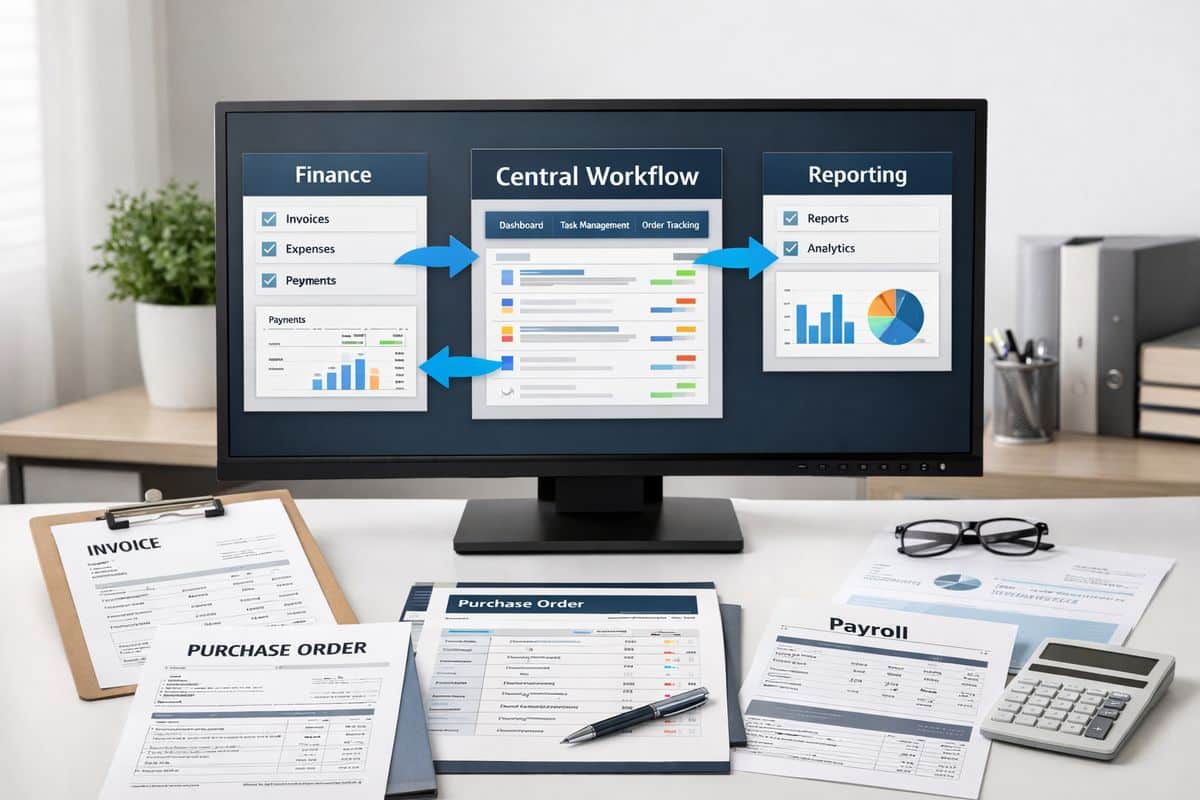
That matters because most growing businesses do not suffer from a lack of tools. You already have tools. The problem is that your accounting platform sits in one place, operations sit somewhere else, and your team fills the gaps with spreadsheets, emails, calls, and manual checks. A strong partner such as Prodyssey Solutions closes those gaps and turns disconnected activity into one visible operating model.
The best providers treat finance, technology, and operations as one system. That means workflow automation, system integration, approval controls, live dashboards, and reporting that reflects what is happening now, not what happened three weeks ago.
Core Services You Should Expect
The baseline offer should include process mapping, workflow redesign, integration between accounting and operational systems, dashboard setup, KPI reporting, approval logic, and ongoing optimisation. Anything less is software configuration dressed up as transformation.
You should also expect practical delivery. That includes linking accounting tools such as Xero with purchasing, CRM, inventory, payroll, field activity, or job costing systems where relevant. If your business depends on operational visibility outside the finance team, the provider should also support tools like InsightFlow for connected approvals, budgets, payables, and reporting, or specialist platforms such as Remato where field operations need tighter control.
The Business Problems Automation Should Solve
The outcomes should be obvious and measurable. Invoicing should move faster. Data entry errors should fall. Approval bottlenecks should shrink. Cash collection should become easier to track. Stock, purchasing, and job costs should stop drifting out of sync with accounting.
Most of all, accountability should sharpen. Once workflows are automated and visible, you can see who approved what, what is overdue, where margins are slipping, and which processes are slowing cash conversion. If you are still chasing updates through five people and two spreadsheets, automation has not done its job.
Signs You Need a Process Automation Company Now
You need outside help when operational friction starts affecting financial control. That usually shows up before anyone labels it an automation problem.
A few warning signs are hard to ignore: duplicate data entry across systems, a slow month-end close, manual invoice handling, spreadsheet-based approvals, inconsistent reporting between departments, and admin costs that rise every time revenue grows. If your business adds people just to keep information moving, your process design is already failing.
Another sign is poor visibility. You should not need separate conversations with finance, operations, and department heads just to understand current performance. If basic answers take too long, your systems are fragmented.
This is also where checking your business readiness for automation becomes useful. Not because you need more theory, but because successful implementation depends on clean ownership, clear workflows, and realistic priorities.
Finance and Operations Disconnects That Cost You Money
This is the biggest issue for SMB owners and finance leaders in Cyprus and Greece. Accounting often records what happened, while operations control what is happening. When those worlds stay separate, decisions arrive late.
You see the damage in delayed invoicing, weak forecasting, margin leakage, uncontrolled purchasing, and poor resource planning. Finance cannot trust operational data. Operations cannot see financial consequences quickly enough. So your team manages by reaction instead of control.
A serious automation partner fixes that connection. If this is your core issue, you need a provider that understands how finance and operational workflows should work together, not one that treats accounting as a back-office reporting function.
How to Evaluate a Process Automation Company
Most providers sound convincing in a sales meeting. The real test is execution quality, system thinking, and commercial discipline.
Start by looking at how the company diagnoses problems. If the conversation jumps straight to a platform demo, walk away. A capable provider starts with process logic, ownership, approvals, data flow, exceptions, and reporting needs. Technology follows process.
Next, test commercial fit. You need a company that can deliver measurable gains without turning a practical improvement project into an expensive consulting exercise. Clear scope, realistic milestones, visible KPI targets, and a support model that continues after launch matter more than presentation polish.
Integration Capability and System Compatibility
Integration should be near the top of your list. Your accounting software, ERP, CRM, inventory tools, purchasing workflows, payroll inputs, and operational systems must exchange data reliably. If your team still rekeys the same numbers in multiple places, you are paying for software without getting system value.
Ask direct questions. Which platforms can be connected? How is data validated? How are failed syncs handled? What happens when exceptions appear? One version of the truth is not a slogan. It is the result of disciplined integration design.
Process Design, Not Just Software Setup
A true automation partner redesigns work. A software installer just switches features on.
The difference is huge. Real automation includes approval rules, exception handling, role-based responsibilities, document routing, escalation paths, and measurable cycle-time improvements. Without that work, automation simply moves bad process into a digital format.
This is why understanding the process errors that usually slow teams down pays off before you sign anything. You want a provider that prevents those errors, not one that introduces new versions of them.
Reporting, Dashboards, and Real-Time Control
Dashboards are not decoration. They are how you run the business with confidence.
You should expect live visibility into cash flow, profitability, overdue approvals, payables, receivables, operational throughput, and management KPIs. Good reporting collapses the distance between action and insight. Instead of waiting for month-end packs, you see pressure points early and respond while the outcome is still changeable.
This is exactly where services such as Real-Time Accounting and connected control platforms gain value. You are not buying prettier charts. You are buying faster decisions, tighter control, and fewer financial surprises.
Industry Fit, Local Market Knowledge, and Support
For businesses in Cyprus and Greece, local understanding matters. Decision structures are often more hands-on, teams are cross-functional, and implementation needs to work around active operations, not in a lab.
Choose a provider with experience in SMEs, not just enterprise language. You need practical rollout, sensible pacing, and support that respects the way owner-led and finance-led businesses actually operate. Strong delivery depends on local business rhythm as much as technical skill.
Types of Process Automation Companies and Which One Fits Best
Not every provider is built for the same job. Choosing the wrong type creates cost, delay, and weak results.
Specialist Automation Firms
Specialist firms focus on workflow automation, integrations, dashboards, and cross-system visibility. This option usually gives you the best mix of speed, focus, and measurable process gains.
If your challenge crosses finance, operations, approvals, and reporting, this is often the strongest fit. You need joined-up delivery, not isolated software work.
ERP or Accounting Implementation Partners
This option fits when your main issue sits inside one platform. If your chart of accounts, accounting setup, reporting structure, or ERP configuration is the real blocker, a platform specialist can solve it efficiently.
The limitation appears when your problems span multiple systems and operational workflows. In that case, accounting setup alone will not fix approval delays, disconnected purchasing, job costing gaps, or field-to-office visibility.
Large Consultancies vs Agile Delivery Partners
Large consultancies bring strategic breadth, formal methodology, and heavyweight project structure. For large enterprises, that can make sense.
For most small and medium-sized businesses, agile delivery partners are a better fit. You get faster implementation, tighter cost control, more direct communication, and solutions shaped around operational reality. Strategy matters, but execution matters more.
Budget, ROI, and Common Buying Mistakes
You should judge cost against control, speed, and measurable reduction in wasted effort. Cheap projects often become expensive when poor scoping, weak adoption, or bad integration leaves your team doing manual work anyway.
What Affects Cost
Cost depends on process complexity, number of systems, integration depth, workflow volume, dashboard requirements, training, and support. Custom approval logic, exception handling, and data cleanup also affect price.
That does not mean every project needs broad scope. In fact, disciplined scope produces better returns. Start with high-friction workflows, high-value reporting gaps, and processes that directly affect cash, control, and admin load.
How to Judge Return on Investment
ROI should be tied to hard operational and financial outcomes: fewer admin hours, faster order-to-cash cycles, lower error rates, stronger working capital visibility, better forecasting, and tighter management control.
If a provider cannot define value in those terms, the proposal is weak. Before approval, insist on a simple model that links project cost to time saved, delays removed, cash released, and reporting speed improved. That is the standard for proving automation is paying for itself.
Mistakes to Avoid When Choosing a Provider
The worst mistake is buying software before fixing process design. Right behind that comes choosing on price alone. Low-cost delivery often skips discovery, adoption, and reporting structure, which leaves you with half-working automation and a frustrated team.
Other common mistakes include undefined KPIs, ignored data quality issues, weak user adoption planning, and choosing a provider that understands systems but not finance and operations together. If implementation changes how people work, adoption is part of the project. It is never an afterthought.
Best Choice by Business Use Case
The right provider depends on the business problem you need solved first. Start there, and the market becomes much easier to judge.
If Your Priority Is Connecting Accounting With Operations
Prioritise integration depth, live reporting, workflow control, and finance-operational visibility. You need a partner that understands approvals, purchasing, payables, invoicing, margins, and operational data as one system.
This is where Business Transformation becomes commercially valuable. The goal is not digitisation for its own sake. The goal is one connected model that gives you real-time control.
If Your Priority Is Faster Growth With Less Admin
Choose a provider focused on scalable workflows, approval automation, standardised process logic, and dashboards that keep management visibility high as volume grows.
Growth should not require admin headcount to rise at the same pace. If your current setup depends on extra coordinators, more spreadsheet checks, and more manual approvals every quarter, your systems are limiting scale.
If Your Priority Is Better Financial Control and Cash Flow
Focus on invoicing speed, receivables visibility, purchasing controls, payables approvals, budget tracking, and management reporting that supports live financial decisions. This is the right path if cash pressure, margin uncertainty, or forecasting weakness is driving the project.
Choose a process automation company that understands business control, not just software setup. When finance, operations, and data work as one, you move faster, protect cash, and run the business with far greater confidence.
Leave a Reply